A small group of training enthusiasts gathered to kick-start the LEARNFAIR trainer community on 19 November 2025 at the Health-RI office in Utrecht.
Summary of the event
FAIR training needs
There still is a clear need for FAIR training, as Martijn Kersloot stressed in his presentation of the project, referring to his study on the perceptions and behavior of clinical researchers and support staff regarding data FAIRification (Scientific Data. 2022 Dec 1;9(1).). Researchers are increasingly required to adhere to the FAIR principles. They need accessible, high-quality training to effectively do so as basic FAIR knowledge is currently lacking. However, FAIR training materials are fragmented, inaccessible, and often not FAIR themselves.
We started the first meeting with speed dating to discuss our ideas on training in general with questions like: ‘What are you most proud of in your trainings’ or ‘What topics do you give trainings for’? Besides getting to know each other better, it also helped to find people with similar training goals and challenges.
What have we learned so far?
The LEARNFAIR team already sent out a survey to collect information about training materials and to find individuals involved in developing or reusing such materials. Maria Vivas Romero presented some preliminary results of the survey (closing 30 November), according to which people are especially missing practical / hands-on workshops, advanced technical topics, and discipline-specific training. The challenges have to do with time, resources and incentives; skills, expertise and culture and Governance and technical barriers. The survey will be followed up by in depth conversations with a number of respondents. In a next meeting we will provide more insights and discuss strategic actions.
Myrthe van Heerden presented the method that was used to do a systematic review on current training materials. The goal is to map the existing landscape of FAIR-related OERs, both in the scientific literature and across online repositories, to understand what exists, how findable it is, and where gaps remain. The study provides valuable insights into what we as a community should focus on.
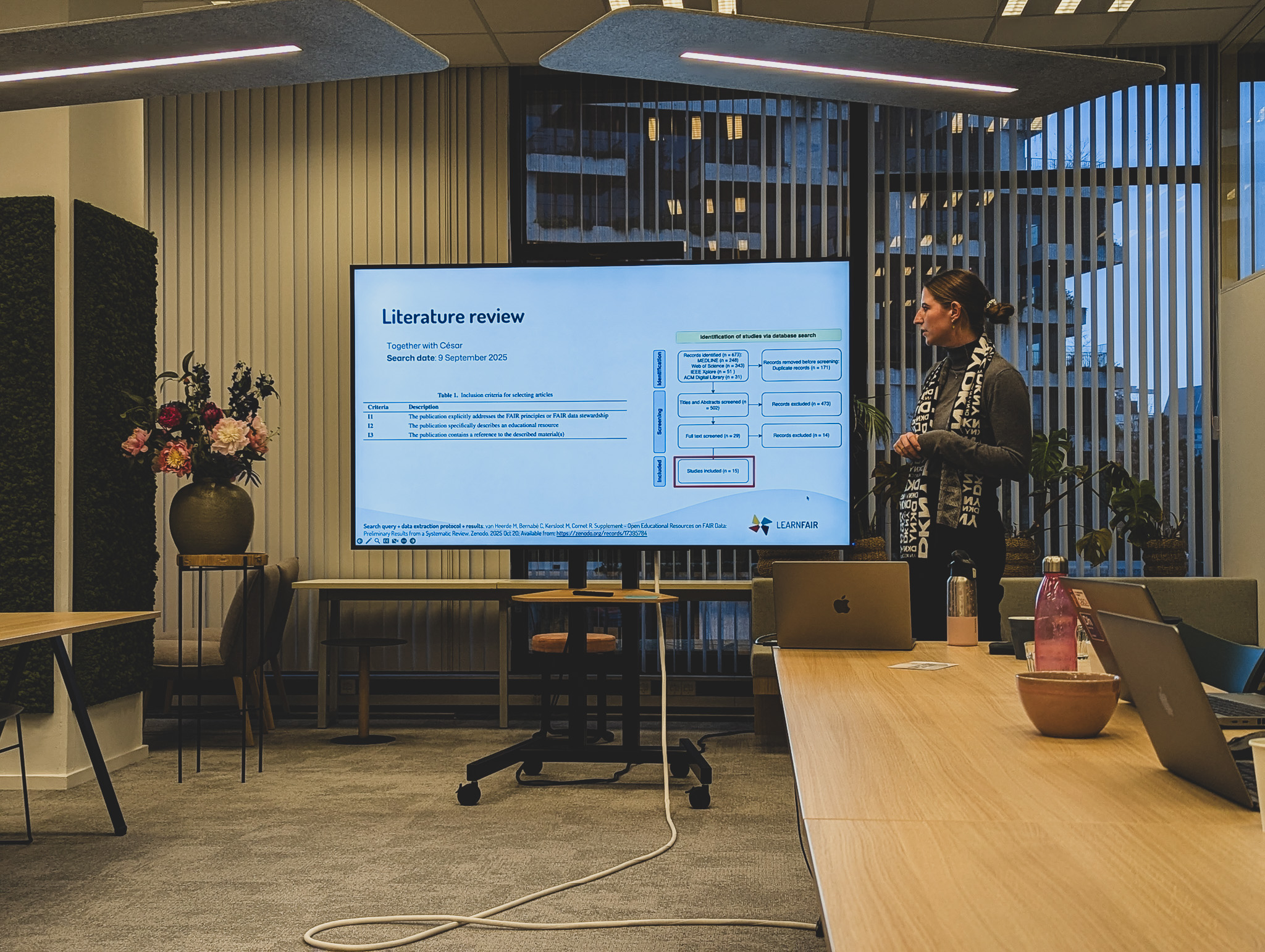
Myrthe presenting on the literature review on training materials
Crash course FAIRifying your training materials
This was followed by a crash course guided by Maria on developing and FAIRifying Open Educational Resources. While checking the FAIRness of a few example materials, we learnt what steps to take and how to achieve quick wins. This is a concrete activity that we would like to continue in future meetings.
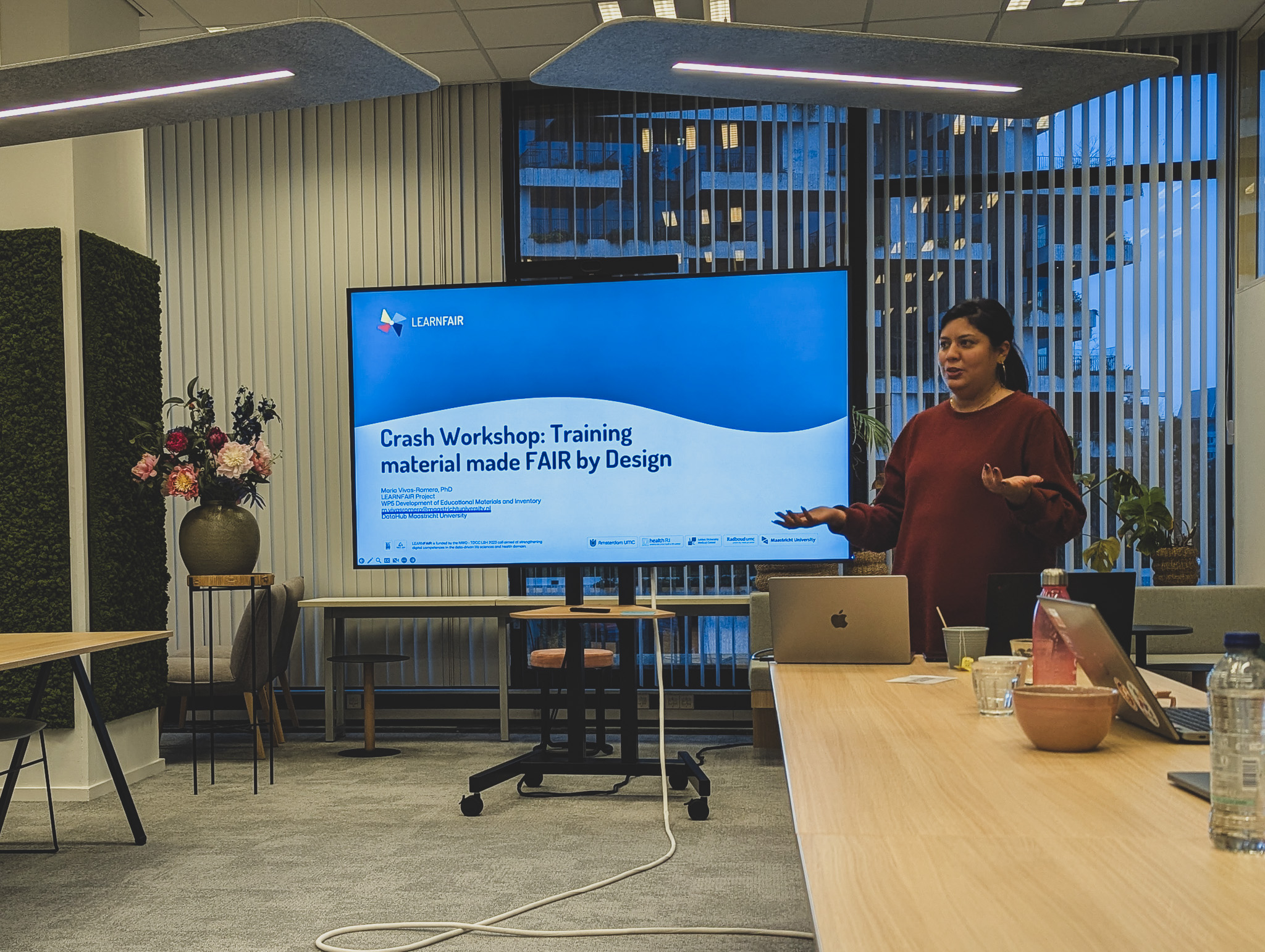
Maria guiding the crash course on making training materials FAIR by design
Building a community
Finally, we came to the community itself: what makes a community? And what makes it worthwhile? Why would one want to join yet another community and attend their events when there is already so much going on? Already earlier, in a Data Stewards Interest Group meeting, we raised these questions and in this meeting it was confirmed once again: the community must help discover best practices and clear examples, expand one’s network and find buddies, avoid reinventing the wheel, coordinate between institutions, exchange materials, save time and, to quote a nice phrase, ‘getting away from FAIR is scary’.
That’s why we need you! Sign up for the LEARNFAIR newsletter to stay informed about our upcoming activities and events. We look forward to welcoming you as a member of our FAIR trainer community!
Resources
-
Community Meeting Slides
DOI: 10.5281/zenodo.17787342
Slides presented at the first LEARNFAIR trainer community meeting
Find all LEARNFAIR resources, presentations, and materials in our Zenodo community.